How destination weddings work (and why they're less stressful than you think)
 By Mark Ambrose
Quick Answer
A destination wedding is a legal marriage ceremony held away from where you live — typically at a resort, beach, or international venue. The resort handles most logistics through a dedicated wedding coordinator. The result is often simpler, more intimate, and less expensive than a traditional at-home wedding. Here's how it actually works.
My destination wedding planning service is 100% free to you — you pay the same price as booking direct.
In This Guide
- 1. What a destination wedding actually is
- 2. How resort wedding packages work
- 3. The guest logistics: what you're responsible for
- 4. Legality: can you really get legally married there?
- 5. Cost comparison: destination vs. traditional wedding
- 6. Popular destination wedding locations
- 7. The travel advisor's role in a destination wedding
- 8. Timeline: when to plan what
- 9. Mark's honest take
- 10. FAQs
What a destination wedding actually is
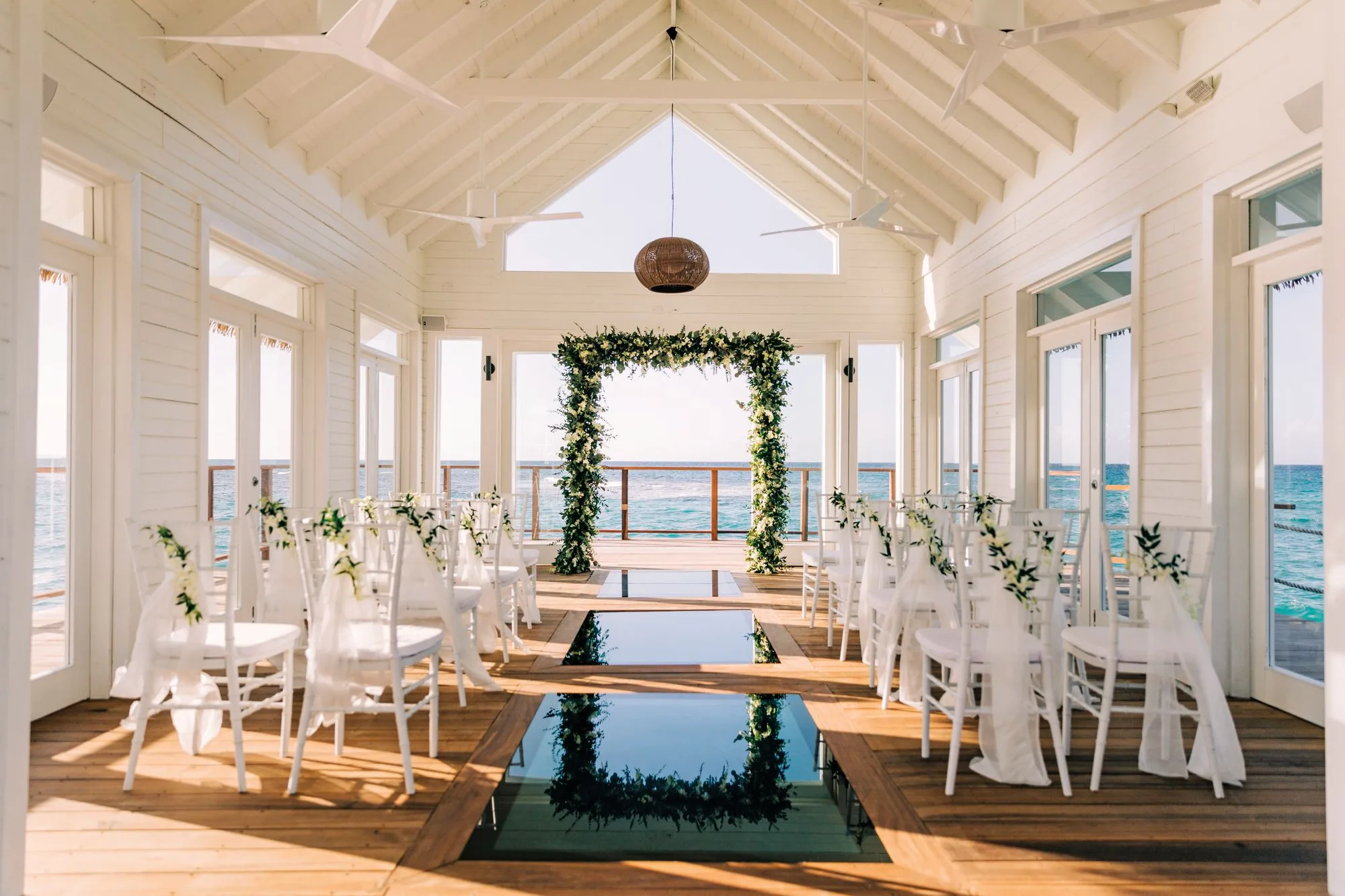
A destination wedding is a legal marriage ceremony held somewhere other than your hometown. That might mean a beach resort in Mexico, a Caribbean island, a European villa, or a boutique hotel in the mountains. The defining characteristic: you travel to get there, and so do your guests.
For most couples, a destination wedding means a resort-based ceremony in the Caribbean or Mexico, where the resort's wedding department handles the ceremony venue, florals, officiant, cake, music, and basic photography as a bundled package. Your travel advisor handles the group room block — securing accommodations for your guests at committed rates.
The Caribbean destination wedding market grew 22% from 2024–2026. There's a reason: couples are discovering that the intimacy, simplicity, and value of a destination wedding often surpasses the traditional at-home model — not as a compromise, but as a genuinely better experience.
How resort wedding packages work
All-inclusive resorts at major Caribbean and Mexican destinations — Sandals, Dreams, Hyatt Ziva, Secrets, Hard Rock, and others — all have dedicated wedding departments with tiered packages. A standard package typically includes:
- Ceremony space — beach, garden, gazebo, or private event venue depending on the property
- Floral arrangements — bridal bouquet, groom's boutonniere, ceremony arch or backdrop
- Wedding officiant — provided by the resort or through a contracted partner
- Wedding cake — typically one-tier included, upgrades available
- Music — speaker system, sometimes a DJ or live musician for ceremony
- Sparkling wine for the toast
- Starter photography package — varies significantly; most couples add to this
- Wedding coordinator — on-site coordinator manages venue-specific logistics, timing, and vendor coordination
Guest accommodations are negotiated as a group room block — this is where the travel advisor earns their value. A committed block of rooms at a set rate, held until a deadline, gives your guests a clear booking target and locks in pricing before rates increase.
Mark's Take
The "free wedding" promotions at some resorts are real. When enough guests book minimum room nights, your ceremony package can be complimentary or heavily discounted. I structured a group at Dreams Royal Beach Punta Cana where the couple's ceremony package was covered entirely by the group room commitment. That's not a marketing trick — it's how the math works when you have an experienced advisor managing the block.
The guest logistics: what you're responsible for
Here's where destination weddings differ most from traditional ones — in a good way. The couple announces the wedding and destination. Guests then decide whether to attend and handle their own travel and accommodation bookings (through the group block your advisor set up, or independently).
The couple is not paying for guest accommodations and meals the way they would at a traditional reception hall. Each guest self-funds their attendance. This fundamentally changes the cost math — and the guest list dynamics.
Typical guest count at a destination wedding: 20–80 people. Travel logistics self-filter the list. The people who show up are the ones who genuinely want to be there. Every couple I've worked with says this turns out to be a feature, not a bug — they got to spend meaningful time with everyone who attended rather than doing a 30-second rotation through 200 relatives.
My recent Punta Cana group had 60+ guests. Coordinating that many rooms, arrival transfers, and constant guest changes (someone drops out, a new +1 is added, a room type changes) is genuinely a full project — which is why the travel advisor role matters so much at this scale.
Legality: can you really get legally married there?
Yes — most Caribbean and Mexican destinations allow legally binding ceremonies, and these are fully recognized in the United States when properly documented.
Requirements vary by country. Some require proof of identity (passport), birth certificate, and documentation of prior relationship status (divorce decree if previously married). Some countries have waiting periods or additional steps. Resorts that do hundreds of weddings per year know exactly what's required and walk couples through the paperwork.
Many couples choose to do a civil courthouse marriage at home first and treat the resort ceremony as the celebration. This simplifies international paperwork significantly without changing anything about the ceremony experience. The vows, the dress, the guests, the flowers — all of that happens at the resort exactly as planned.
Mark's Pro Tip
Don't stress the legal piece. Resorts that specialize in destination weddings have done hundreds or thousands of them. Their wedding coordinator will hand you a checklist of exactly what documents you need. And if you go the courthouse-first route, you keep the romantic experience without any international paperwork complications. I've seen couples agonize over this for months — it's always simpler than expected.
Cost comparison: destination vs. traditional wedding
Let's talk about the math that surprises most couples.
| Cost Element | Traditional Wedding | Destination Wedding |
|---|---|---|
| Venue + ceremony space | $5,000–$15,000+ | Included in package or free with room block |
| Catering (per guest) | $75–$200+ per person (couple pays) | All-inclusive — guests pay for their own stay |
| Open bar | $3,000–$8,000+ | Included in all-inclusive |
| Florals | $2,000–$10,000+ | Partial — basic included, upgrades extra |
| Wedding package total cost | $30,000+ average | $3,000–$15,000 (event itself) |
| Couple's vacation included? | No (separate cost) | Yes — honeymoon is the trip |
The key shift: at a traditional wedding, the couple pays for the venue, catering, bar, and décor for every guest. At a destination wedding, guests self-fund their attendance. This moves a massive cost off the couple's plate. Even accounting for the couple's own travel and resort stay, many couples spend significantly less on the destination wedding than they would at home.
Popular destination wedding locations
These are the resorts I work with most for destination weddings, based on guest capacity, wedding infrastructure, and overall client satisfaction:
- Dreams Royal Beach Punta Cana — large venue capacity (60+ guests comfortably), excellent wedding infrastructure, strong group room block options. I personally attended a wedding here in July 2026 — the logistics team is outstanding.
- Sandals Grande St. Lucian — dramatic peninsula setting, overwater bungalows, the most romantic ceremony backdrops in the Caribbean. Ideal for smaller, intimate weddings with high impact.
- Hyatt Ziva Cancun — family-friendly option with strong group room block infrastructure. Good choice when the wedding party includes kids and extended family.
- Secrets resorts — adults-only, upscale, multiple Caribbean and Mexican locations. Strong all-inclusive product with good wedding packages.
- Hard Rock Hotels & Resorts — high-energy, entertainment-focused properties with strong wedding infrastructure across Mexico and the Caribbean. Great for couples who want a livelier, more festive atmosphere.
- Riu Hotels & Resorts — solid value across multiple destinations with reliable group pricing and dedicated wedding coordinators. A strong choice for larger groups on a broader budget range.
The travel advisor's role in a destination wedding
The resort's wedding coordinator handles the ceremony side — venue setup, officiant, florals, cake, day-of coordination. But there's an entire parallel project that the coordinator doesn't touch: the travel side.
That's where I come in. Here's what I actually do for a destination wedding group:
- Group room block negotiation — securing rooms at committed rates for all guests, negotiated with the resort before they're publicly listed
- Managing individual guest payments — each traveler pays separately while remaining in the group block; I handle the coordination
- Transfer coordination — airport pickups, shuttle logistics for all guests arriving at different times
- Handling the inevitable changes — someone drops out, someone adds a +1, a room category needs to change. These happen at every destination wedding and need a coordinator
- Communication hub — I'm the single point of contact for travel questions, so the couple isn't managing 50 text threads while simultaneously planning a wedding
- Free wedding package qualification — structuring the room block so the couple qualifies for the complimentary or discounted ceremony package
Mark's Take
The couple hires a wedding coordinator for ceremony details. I manage the travel side — and for a 60-person group, that's a full-time job for the months leading up to the trip. Couples who try to manage the group travel themselves while also planning the wedding almost universally regret it. It's not a judgment — it's just genuinely a lot of moving parts. Having an advisor handle it means the couple actually gets to enjoy the engagement period.
Timeline: when to plan what
- 12–18 months out: Choose the resort, set the date, work with your advisor to establish the room block. This is the most time-sensitive step — popular resorts and peak dates book out fast.
- 12 months: Announce to guests, officially open the room block. Give guests a booking deadline — typically 6–9 months before the wedding.
- 9–12 months: Guests should start booking rooms. The sooner they book into the block, the more likely you are to qualify for the free/discounted wedding package threshold.
- 6 months: Finalize ceremony details with the resort's wedding coordinator. Decide on floral upgrades, photography packages, reception dinner setup.
- 3 months: Confirm headcount, finalize catering minimums if applicable, handle any room changes.
- 1 month: Final confirmations, payment deadlines, pre-trip details distributed to the group.
Mark's honest take: what most couples don't expect
After working on multiple destination wedding groups, here's what I see consistently:
What surprises most couples: how much simpler the day itself is compared to a traditional wedding. The resort staff has done this hundreds of times. They know the light at 5pm, they know where to position the arch, they know how to run the timeline. There's no scrambling. The day is just... relaxed. Couples who've done both a traditional wedding and a vow renewal at a resort tell me the difference is striking.
What most couples don't expect: the travel coordination for guests is a bigger job than it sounds. Changes happen constantly. Someone can't come anymore. Someone found a cheap flight and wants to arrive a day early. Someone needs a crib in their room. An experienced advisor handles all of this — doing it yourself while planning a wedding is genuinely overwhelming.
The hidden bonus: the people who commit to a destination wedding become part of a shared experience. The whole group is together for 4–7 days instead of 4 hours at a reception. Every couple I've worked with comes back saying the same thing: "It felt more like a family vacation that happened to include a wedding — and it was perfect."
Thinking about a destination wedding?
I handle the travel side so you can focus on the wedding side. Free consultation, no pressure — let's talk through your vision.
Frequently asked questions
How much does a Caribbean destination wedding cost?
The wedding package itself typically runs $3,000–$15,000 depending on the resort and what's included. Unlike traditional weddings, guests pay for their own travel and accommodations — which shifts significant cost away from the couple. Many couples spend less overall on a destination wedding than a local reception.
How many guests typically attend a destination wedding?
Most destination weddings have 20–80 guests. The travel requirement naturally curates the list — only people who genuinely want to celebrate with you will make the trip. This is often considered a feature, not a bug.
Is a destination wedding legally recognized in the US?
Yes — if the ceremony is legally performed in a recognized country and properly documented, it's fully recognized in the US. Many couples simplify the paperwork by doing a courthouse marriage at home first and treating the resort ceremony as the celebration.
Do I need a travel advisor for a destination wedding?
For any group over 15 people, strongly yes. The coordination of room blocks, individual guest payments, transfers, and constant changes is a full-time project. An experienced travel advisor handles this so you and your partner aren't managing 50 text threads while planning a wedding.
When should I start planning a destination wedding?
12–18 months out is ideal. This gives you time to secure the resort, establish a room block, and give guests enough runway to plan and book travel. Popular resorts and peak dates book out fast.
Can we get a free wedding package at a resort?
Yes — some resorts offer complimentary or deeply discounted ceremony packages when guests book a minimum number of room nights. This is real, and a good travel advisor knows which resorts offer it and how to structure the group block to qualify.
Related Articles
Sandals vs. Beaches Resorts: Which Brand Is Right for You?
Read More → All-InclusiveSandals vs. Beaches Resorts: Which Is Right for You?
Read More → Group TravelWhat Is a Group Cruise (And Why It Saves More Than You Think)
Read More → Travel PlanningWhat Does a Travel Advisor Actually Do?
Read More →
Planning a destination wedding? Let's talk.
I'm Mark Ambrose — I handle the travel side of destination weddings so couples can focus on the wedding side. Group room blocks, guest coordination, transfers, and free wedding package qualification. Free to work with, no fees.